

ABOUT ST. GEORGE
The Great Martyr, Victory-Bearer, and Wonderworker — a story of extraordinary courage, unshakeable faith, and the triumph of good over evil.
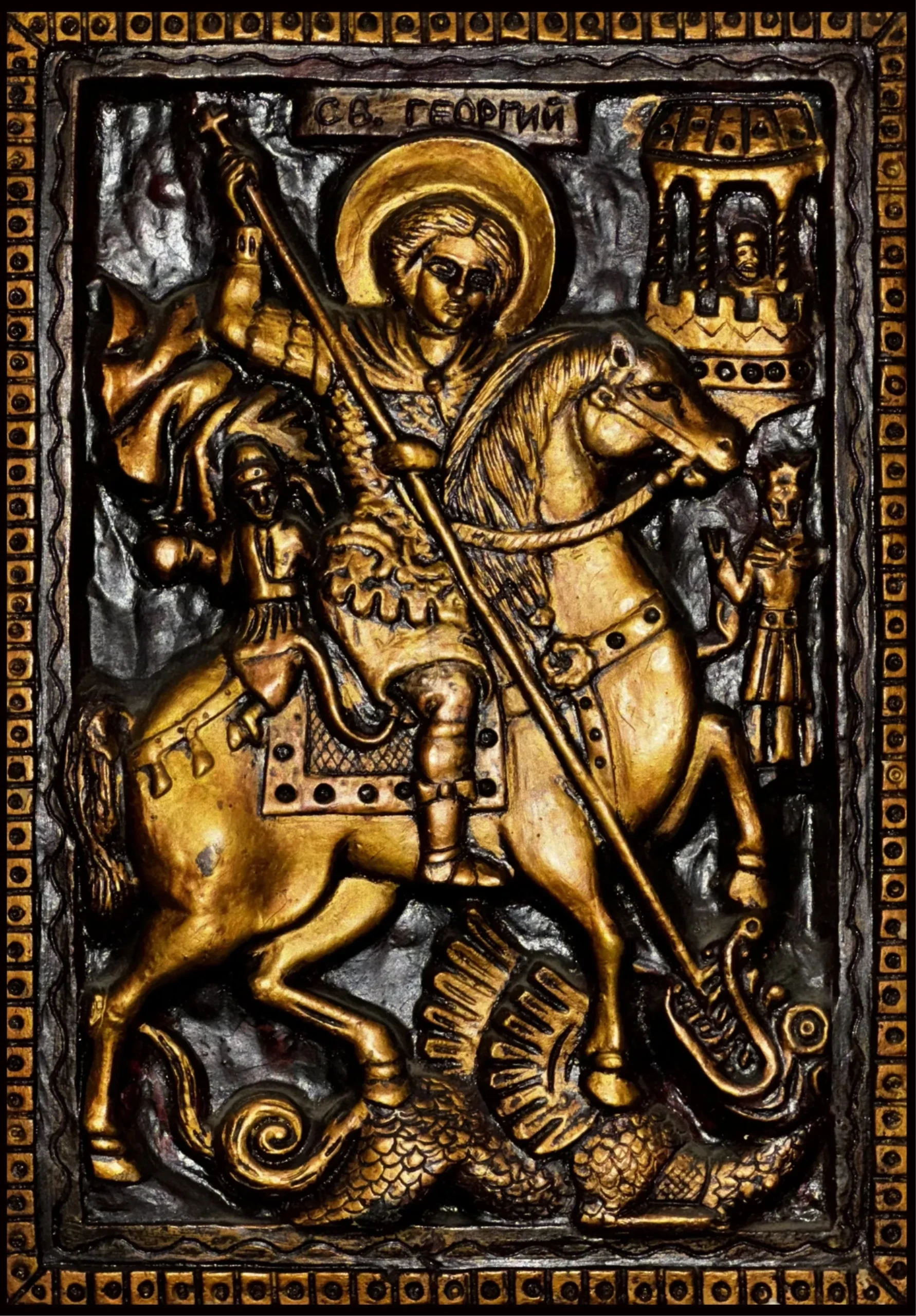
THE GREAT MARTYR St. GEORGE
The Holy Great Martyr George the Victory-Bearer was a native of Cappadocia in Asia Minor, raised in a deeply believing Christian family. His father was martyred for Christ when George was still a child. His mother, owning lands in Palestine, moved there with her son and raised him in strict piety.
When he came of age, Saint George entered the Roman army. Handsome, brave, and valiant in battle, he rose quickly through the ranks and came to the notice of Emperor Diocletian himself, joining the imperial guard as a military commander.
He died before he was thirty years old — yet his legacy has endured for nearly two thousand years. He is known as the Victory-Bearer not only for his military achievements, but for the extraordinary courage with which he endured martyrdom.
COURAGE IN THE FACE OF POWER
A STAND AGAINST PERSECUTION
Emperor Diocletian, fearing the growing power of Christianity, intensified his persecution of Christians in the final years of his reign. When George heard the emperor's decree — granting governors full freedom to prosecute Christians — he made a decision that would define his legacy. He distributed all his wealth to the poor, freed his servants, and appeared before the Senate to openly confess his faith. "I am a servant of Christ, my God," he declared, "and trusting in Him, I have come among you voluntarily, to bear witness concerning the Truth."
TORMENTS AND MIRACLES
The enraged emperor subjected George to a series of brutal tortures — bound to a spiked wheel, thrown into a pit of lime, shod in iron sandals with red-hot nails, and beaten with ox thongs. Yet each time, George emerged healed and unbroken, strengthened by a power that confounded his persecutors. An angel appeared to him in prison. He raised a dead man before the emperor's own eyes. Even the emperor's sorcerer, sent to break George's spirit, fell at his feet and confessed Christ. Through it all, George's spirit remained unyielding: "You will grow tired of tormenting me sooner than I will tire of being tormented by you."
THE SLAYING OF THE DRAGON
Among the many miracles attributed to Saint George, the most famous is his slaying of the dragon. Near the city of Beirut, an enormous serpent terrorized the people, and a local ruler had been sacrificing his own people — by lot — to appease it. When the ruler's own daughter was chosen, Saint George rode up on horseback, made the Sign of the Cross, and charged the beast with his spear, crying: "In the Name of the Father and of the Son and of the Holy Spirit." He pierced the serpent's throat and trampled it beneath his horse. Then he told the girl to bind the serpent with her sash and lead the dead dragon into the city like a dog on a leash. Twenty-five thousand people witnessed the miracle and were baptized that day.
MARTYRDOM AND LEGACY
On April 23, 303 AD, Saint George was beheaded — calmly and bravely bending his neck beneath the sword, receiving the crown of martyrdom. He was not yet thirty years old. Within ten years, Saint Constantine would issue the Edict of Milan, granting religious freedom to Christians throughout the Roman Empire. The pagan era was ending. Saint George's courage had not been in vain. His image — the knight on horseback slaying the dragon — became a symbol of good triumphing over evil, adopted by nations, cities, and armies across the centuries. He is the patron saint of England, Georgia, and countless others who have drawn inspiration from his story.
THE Patron Saint of OUR ACADEMY
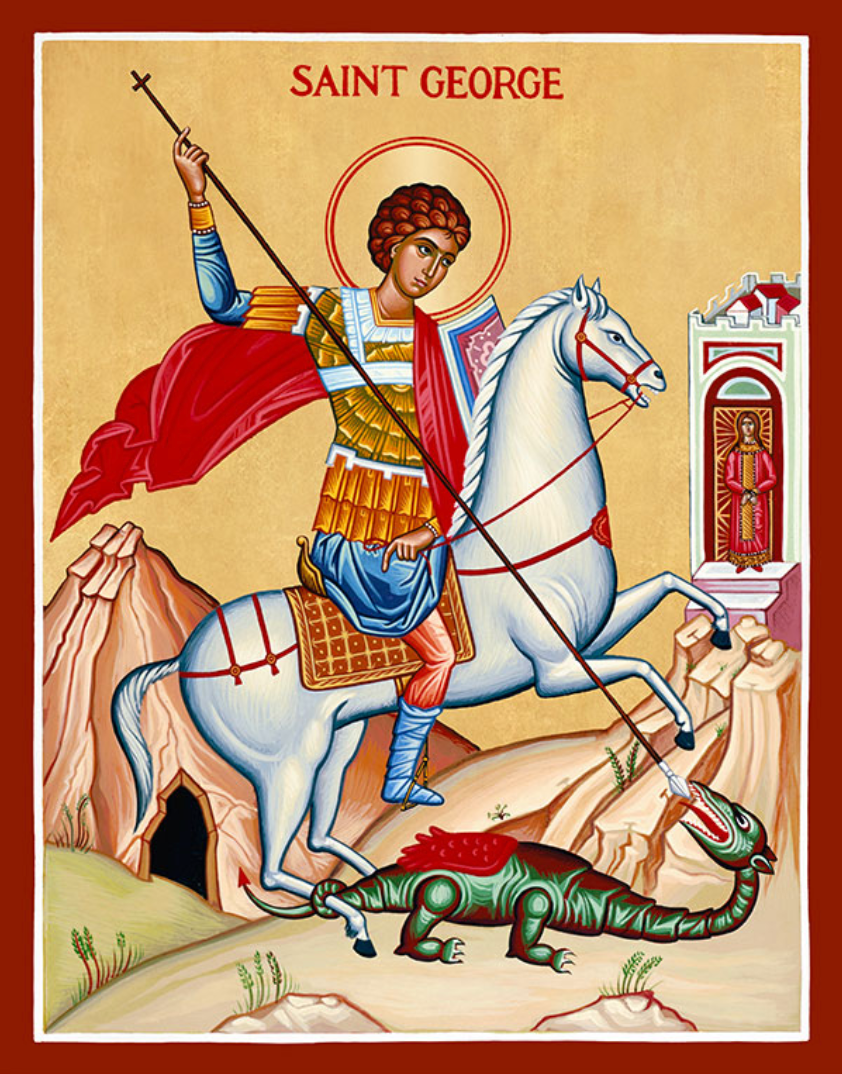
We named our academy after Saint George because his story embodies everything we want to instill in our young athletes — courage under pressure, perseverance through adversity, and the belief that character matters more than circumstance.
On the tennis court, every player faces their own battles: a tough opponent, a lost set, a moment of self-doubt. The spirit of St. George reminds us that champions are not defined by whether they fall, but by whether they rise. That is the standard we hold ourselves to at St. George Tennis Academy — in Spartanburg, SC, and on every court our athletes compete on.
"You will grow tired of tormenting me sooner than I will tire of being tormented by you."
— Saint George's words to Emperor Diocletian during an interrogation shortly after being tortured